
Muffled hearing can impact every facet of your life, leaving you feeling disoriented and disconnected from the world around you. It is common to assume that muffled sound signifies chronic hearing deficiency, but the problem is often just a resolvable earwax blockage.
Knowing how to tell these two conditions apart ensures you seek the appropriate treatment, whether that is professional cerumen extraction or a clinical hearing test. If you’re experiencing dull hearing, remain calm. A consultation can help you uncover the source of it, but in the interim, here’s what you should consider about earwax buildup (also referred to as earwax blockage) vs. permanent impairment.
How to Recognize a Cerumen Impaction
Earwax is actually a healthy, natural substance intended to protect the ear canal from dust and external debris. Issues occur when too much wax builds up or becomes impacted.
Symptoms of a clog often feature:
- A significant reduction in hearing volume
- The sense that there is a physical plug in the ear
- Localized sensitivity or focused aching in the ear
- Constant humming or ringing sounds
- Auditory clarity that clears temporarily after yawning or chewing
Cerumen-based hearing issues are often uneven, affecting one ear rather than the other. Fortunately, once excess wax is safely removed, hearing often reverts to baseline instantly.
Recognizing the Signs of Permanent Hearing Loss
Unlike a brief obstruction, nerve-based hearing impairment typically progresses slowly over decades and is not fixed by cleaning the ear.
Markers of irreversible auditory decline often involve:
- Challenges with speech intelligibility in crowded or noisy settings
- A constant need for speakers to articulate more clearly or loudly
- A tendency to increase sound volume notably to compensate for hearing loss
- Difficulty detecting high-pitched tones
- Auditory ability uniformly reduced in both ears
A vital distinction is that true loss misses the physical “plugged” feeling that accompanies a cerumen blockage.
At-a-Glance: Earwax vs. Hearing Loss
When comparing cerumen impaction vs. hearing loss, a handful of clues can help guide you in the right path:
- Timing: Earwax issues often come on abruptly; auditory impairment develops slowly
- Longevity: Wax issues are treatable and short-term, whereas loss is typically chronic
- Symptoms: Pressure and irritation suggest wax; speech clarity challenges suggest impairment
- Balance: Clogs are frequently asymmetrical, but lasting loss is frequently two-sided
Why Clinical Consultation is Crucial
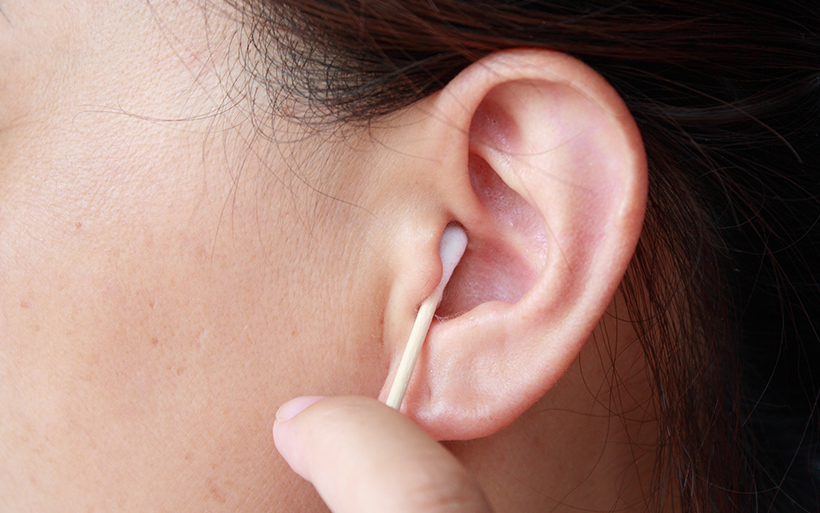
You may feel compelled to assume cerumen is the culprit — and reach for Q-tips or over-the-counter kits. Regrettably, these can shove wax further in and worsen the problem.
Based on data from the National Library of Medicine, placing objects into the auditory canal increases the likelihood of blockage and trauma.
On the flip side, assuming a problem is just wax when it is actually hearing loss can hinder you from getting the assistance you require to stay engaged.
The Importance of a Clinical Otoscopy
A brief otoscopic check can quickly verify if earwax is blocking the canal.
When wax is the issue, in-office flushing or clinical removal delivers immediate resolution.
When the canal is unobstructed but sound is still muffled, a clinical assessment is required to audit your auditory health.
Medical authorities suggest obtaining a clinical evaluation as soon as you notice hearing changes that affect your lifestyle.
Determining Earwax Blockage or Hearing Loss?
Dampened hearing doesn’t necessarily indicate irreversible damage.
In numerous instances, earwax buildup is the source, and it’s extremely manageable.
Seeking expert attention guarantees you find the exact cause and the proper remedy for your hearing needs.
Please note that self-diagnosis is no substitute for a clinical exam when it pertains to your auditory health.
Finding answers early can avert pointless stress and guarantee you receive the right treatment at the optimal moment.
Rather than guessing what is wrong, book a quick check-up with our audiologists to uncover the truth.