Oticon Reveal is the first hearing aid to run two AI systems at the same time — one trained on speech, one trained on everything else. That sounds like a marketing line, but it addresses a real and specific problem: most hearing aids force a trade-off between hearing the person in front of you and staying aware of the room. Reveal is Oticon’s attempt to stop making you choose. Here’s what that means in practice.

What Makes Oticon Reveal Different
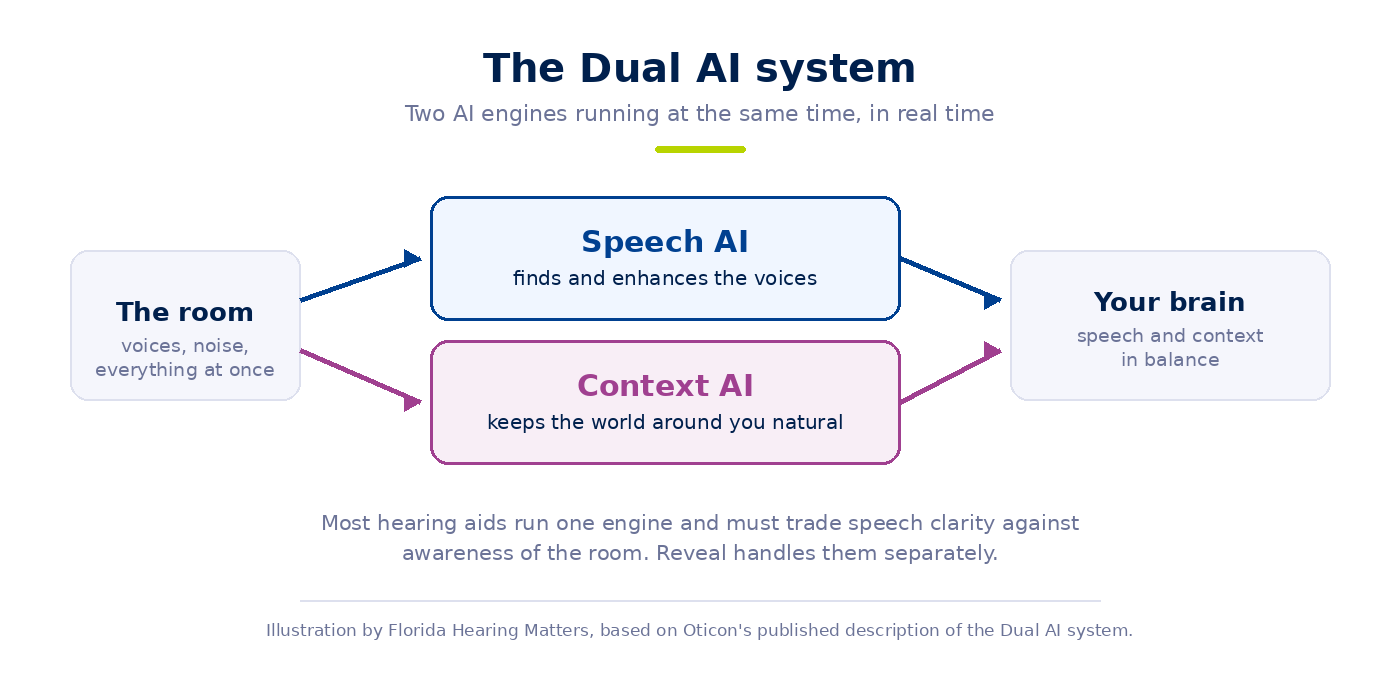
Most hearing aids run a single processing engine that has to make one decision about the whole sound scene: how aggressively to suppress what it thinks is noise. Push it hard and speech gets clearer but the world goes flat and unnatural. Back it off and you keep the atmosphere but lose the conversation.
Reveal splits that job in two. Oticon calls it the Dual AI system:
- Speech AI — continuously identifies and enhances the speech of people around you, in real time, from any direction.
- Context AI — recognizes and balances the surrounding sounds so the environment stays present and natural rather than being flattened away.
The two run simultaneously and negotiate with each other rather than one overriding the other. Oticon’s research points to an optimal balance point between speech and surrounding sound — one that shifts depending on the situation, and where the brain works most efficiently. Reveal works continuously, in real time, to hold you at that point.
This is a continuation of Oticon’s long-standing BrainHearing philosophy, not a departure from it. Oticon’s bet has always been that listening is a cognitive process, not just an acoustic one, and that a hearing aid’s job is to give the brain enough information to do its own filtering. Dual AI is the most literal expression of that idea they’ve shipped.
The Reveal Optimizer: More Gain Without the Whistling
The second headline in this platform is less glamorous but arguably more useful day to day. Feedback — that whistling squeal — is the reason many patients can’t be given as much amplification as their hearing loss actually calls for. The hearing aid has to hold back to stay stable.
The Reveal Optimizer is Oticon’s new feedback prevention and gain management system. It reacts 30% faster than their previous system and works proactively — catching feedback before it starts rather than cancelling it once it has. Oticon reports it delivers up to 4 dB of additional headroom and 10% or higher predicted speech access compared with three top competitors.
Practically: more usable amplification, more stable fittings, and fewer patients stuck with an open fitting that whistles the moment they hug a grandchild or put on a hat.
Who Oticon Reveal Works Well For
- Adults with mild to severe hearing loss — the miniRITE covers the standard audiometric range used by most patients.
- Patients who’ve struggled with “tunnel vision” from aggressive noise-reduction hearing aids — if you’ve felt isolated by devices that cut out everything except the loudest voice, Reveal’s Context AI is specifically designed against that failure mode.
- Patients who need more gain than previous aids could deliver — the Reveal Optimizer’s feedback headroom is a real advantage for steeper losses and for patients whose fittings have historically whistled.
- Active adults moving through varied environments — the Dual AI adapts continuously without you switching programs.
- Patients who want current connectivity — Bluetooth LE Audio, Auracast, direct iPhone/iPad/Apple Watch streaming, and Android optimization, with better streaming range and signal strength than the previous generation.
- Music lovers — Oticon’s approach to preserving the full sound scene has always suited music better than speech-only optimization.
Where It’s Less of a Fit
- Patients who specifically want aggressive noise suppression — if your priority is “cut out everything except the person in front of me,” Phonak’s Audéo EON Sphere with its dedicated HYPERSONIC chip may suit you better. These are genuinely different philosophies, and patients tend to have a clear preference once they hear both.
- Profound hearing loss — the miniRITE form factor handles up to severe loss; profound loss patients should look at Oticon’s more powerful models such as the Xceed.
- Patients who prioritize cosmetic invisibility above all — Reveal is a behind-the-ear style. If invisibility is the priority, Phonak Lyric is worth a conversation.
- Strict budgets — Reveal is a premium tier device. We’ll review pricing, insurance verification, and financing during consultation.
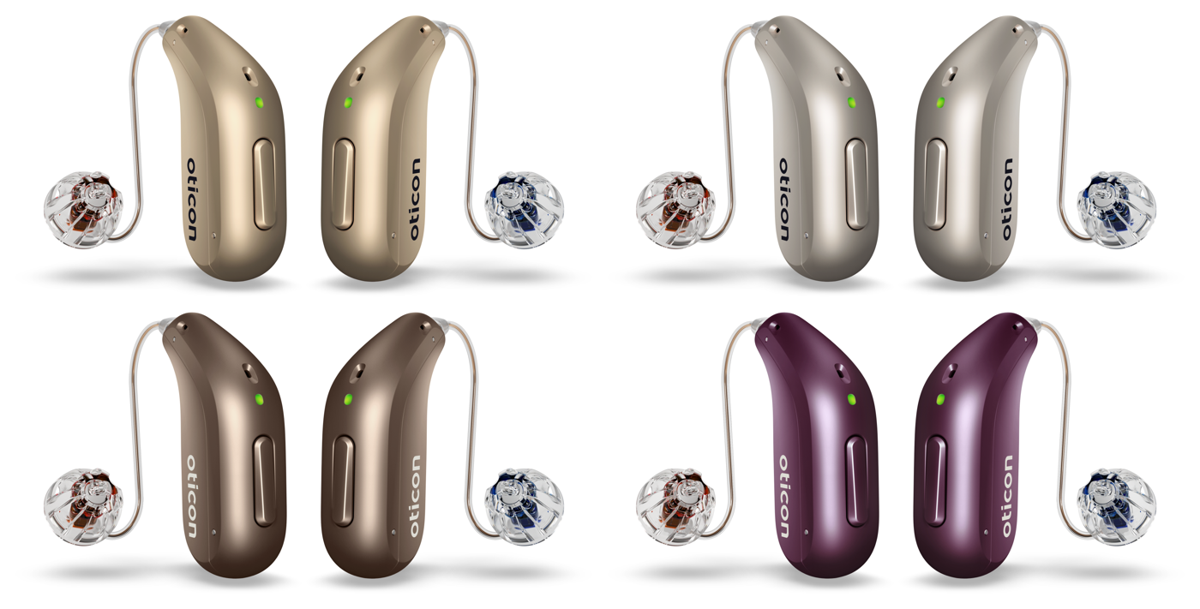
Color Options
Oticon Reveal comes in a range of discreet colors designed to blend with hair, skin tone, or eyewear:
What You Get With Oticon Reveal
- Dual AI system — Speech AI and Context AI running simultaneously
- Reveal Optimizer — proactive feedback prevention, 30% faster, up to 4 dB more headroom
- BrainHearing platform — tuned to the brain’s natural balance point between speech and context
- 360° sound environment — full acoustic scene preserved, not narrowed
- Bluetooth LE Audio — including Auracast broadcast reception for public spaces
- Direct streaming for iPhone, iPad, and Apple Watch, plus Android optimization
- Hands-free two-way calls — talk through the hearing aids without holding the phone
- Improved streaming range and signal strength over the previous generation
- Rechargeable — up to 20 hours per charge; a 15-minute quick charge gives about 4 hours
- Two charger options — desktop charger, or the portable SmartCharger for travel
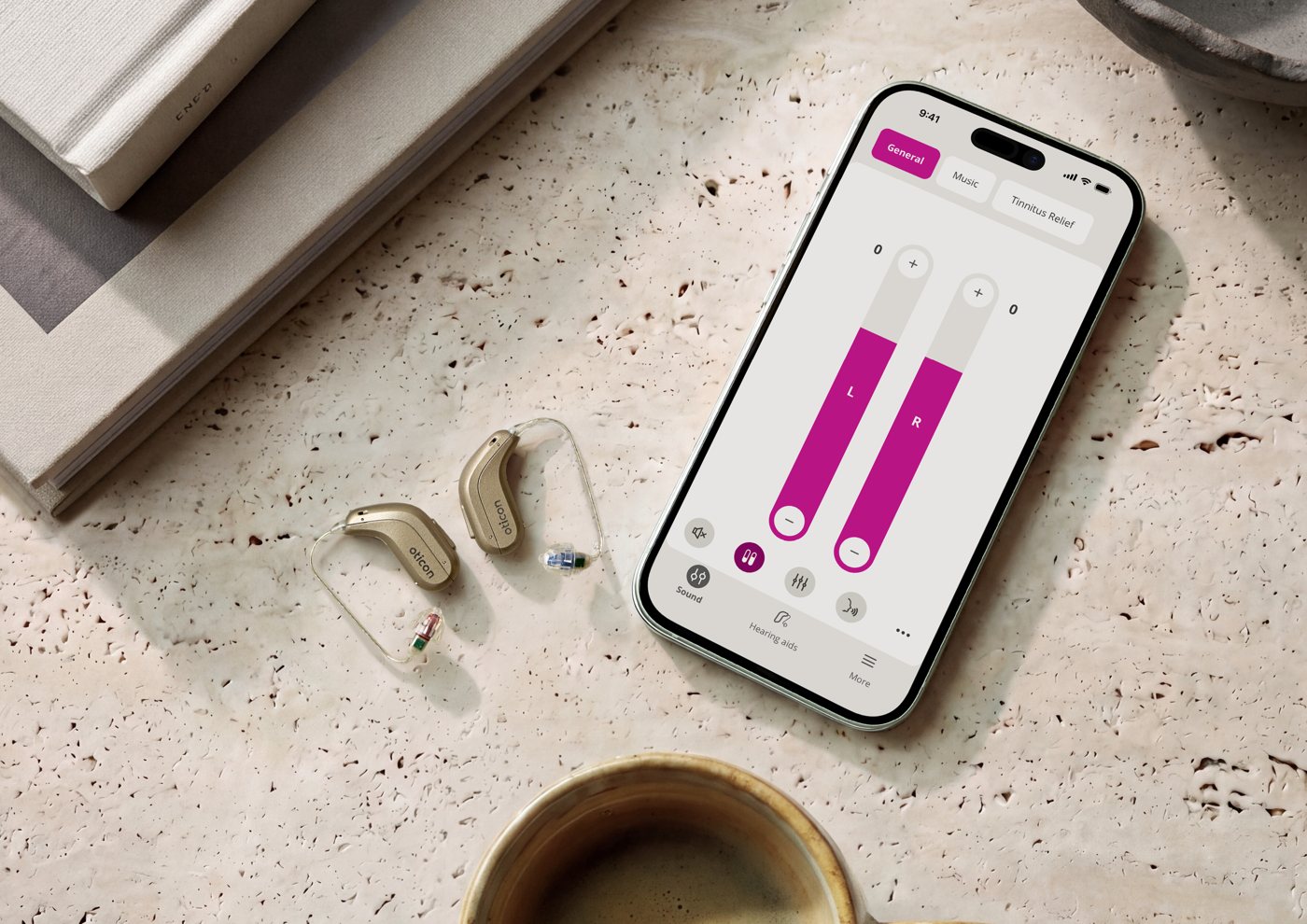
- Oticon Companion app for control and customization
- Tinnitus management built in
What Changed From the Oticon Intent
If you researched Oticon Intent — the model Reveal replaces — the short version is that Reveal is a new platform rather than an incremental update. Intent’s signature was 4D Sensor Technology: motion sensors reading your head and body movement to infer what you were trying to listen to. Reveal’s signature is the Dual AI system: two parallel AI engines splitting the work between speech and context.
Alongside that, Reveal adds the Optimizer’s substantially better feedback management and gain headroom, and improves streaming range and stability. Intent remains a very good hearing aid — if you’re already wearing one, this is not a reason to replace it mid-life. For new fittings, Reveal is what Oticon is now building on.
The Oticon Approach: BrainHearing
Most hearing aid manufacturers focus on what hits the microphone. Oticon focuses on what happens in your brain. Their entire engineering philosophy — called BrainHearing — starts from the premise that listening is a cognitive process, not just an acoustic one. Your brain works hard to filter out distractions, identify voices, and follow conversations. The job of a hearing aid is to give your brain enough acoustic information to do that work without exhausting itself.
Practically, this means Oticon devices tend to feel less fatiguing over a long day than aggressively-processed alternatives. Patients often describe them as “sounding more natural” — which is exactly what Oticon engineers for.
How We Fit Oticon Reveal at Florida Hearing Matters
Every Oticon Reveal fitting at Florida Hearing Matters includes:
- Comprehensive audiometric evaluation — mapping your exact hearing loss profile before recommending anything
- Real-ear verification — we measure what the hearing aid is actually delivering to your eardrum and program the device to your individual ear acoustics
- Lifestyle consultation — we ask about the situations where you struggle most, so we can program the AI’s preferences for your real life
- Follow-up visits included — typically three follow-ups in the first 60 days to fine-tune as your brain adjusts
- 60-day satisfaction guarantee — if Reveal isn’t the right fit, return it. No pressure.
- Oticon Companion app setup — we’ll walk you through pairing with your phone, controlling settings, and using the remote-microphone feature
Frequently Asked Questions
What is a “Dual AI system” and why does it matter?
It means the hearing aid runs two separate AI engines at once instead of one. The first is trained on speech — it finds and enhances the voices around you. The second is trained on everything else — it keeps the surrounding environment balanced and present instead of flattening it. Single-engine hearing aids have to compromise between those two goals; Reveal handles them separately. The practical benefit is hearing the conversation clearly while still feeling like you’re in the room rather than in a tunnel.
How is Reveal different from the Oticon Intent?
Reveal is a new platform, released in late August 2026, not a refresh of Intent. Intent’s defining feature was 4D Sensor Technology — motion sensors that inferred your listening intent from head and body movement. Reveal’s defining feature is the Dual AI system, plus a substantially better feedback and gain management system called the Reveal Optimizer. If you currently wear Intent and it’s working well, there’s no urgency to switch. For a new fitting, Reveal is the current platform.
Does it work with iPhone? Android?
Yes to both. Oticon Reveal has direct streaming for iPhone, iPad, and Apple Watch, and is optimized for Android via Bluetooth LE Audio. You can take hands-free calls, stream music and TV, and use FaceTime or video calls through the hearing aids. Streaming range and signal strength are improved over the previous generation.
What is Auracast and where can I use it?
Auracast is a Bluetooth-based broadcast technology being installed in public venues — theaters, airports, houses of worship, conference centers, museums, gyms. If a venue supports Auracast, your Oticon Reveal can connect directly to the venue’s audio stream instead of straining to hear it across the room. Adoption is still growing, but Reveal is ready for it.
My old hearing aids whistled. Will these?
Feedback is exactly what the Reveal Optimizer is built to solve. It responds about 30% faster than Oticon’s previous system and works proactively — heading feedback off before it starts. Oticon reports up to 4 dB of extra headroom, which in practice means more usable amplification before whistling becomes a risk. If whistling has been a recurring problem for you, mention it at your appointment; it directly shapes which device and which fitting style we recommend.
Will my insurance cover it?
Hearing aid coverage varies widely by insurance plan. Many plans offer partial coverage or an annual allowance; some cover hearing aids only under specific conditions. We verify your benefits before your appointment — just call us at (954) 999-5495 with your insurance card information.
What if Reveal isn’t the right fit for me?
We include a 60-day satisfaction guarantee. If Reveal isn’t the right hearing aid for your life, return it for a refund of the device cost. Most patients use the 60-day window to test the devices in their actual day-to-day environments — work, family meals, social events — before fully committing.