Oticon Intent is the world’s first hearing aid with user-intent sensors — it doesn’t just amplify sound, it actively understands what you’re trying to listen to and shifts the way it processes sound accordingly. If you’ve struggled with hearing aids that feel one-size-fits-all, Intent takes a fundamentally different approach. Here’s what that means in practice.

What Makes Oticon Intent Different
Most hearing aids work by detecting sound and amplifying it. Oticon Intent goes further: it tries to figure out what you want to hear in any given moment, then adjusts how it processes sound based on that intent.
It does this with a system Oticon calls 4D Sensor Technology — a combination of motion sensors that read your head movement, body movement, conversational context, and acoustic environment. When you turn your head toward someone speaking, when you stop walking, when you lean forward into a conversation — Intent picks up these signals and uses them to adjust microphone direction, noise reduction, and signal processing in real time.
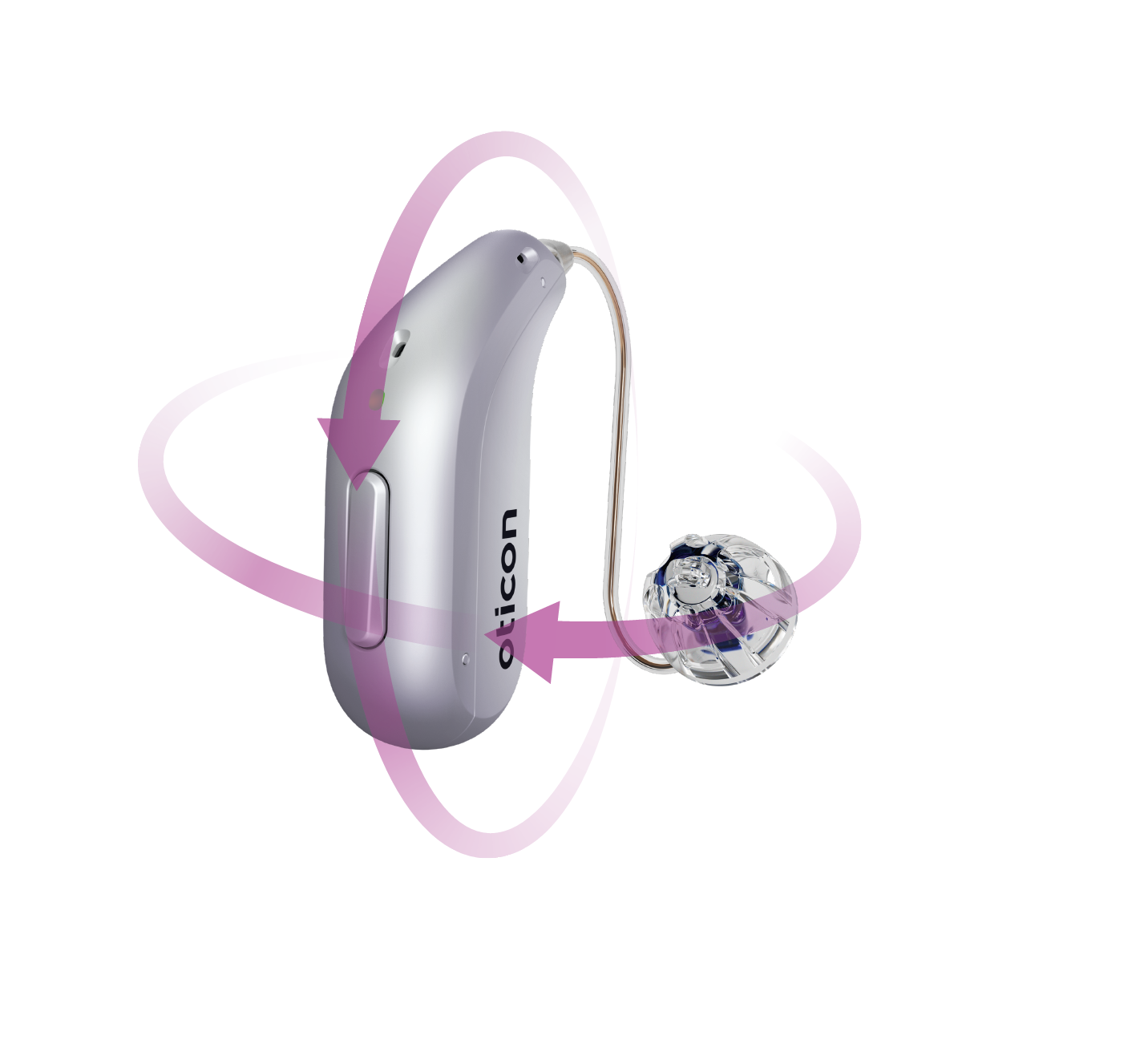
The processing engine driving all this is Oticon’s second-generation AI BrainHearing platform. It’s trained on a deep neural network model of how the human brain actually processes sound — not just speech in front of you, but the full acoustic scene around you. The result is that Intent doesn’t aggressively suppress background sound to spotlight one voice (which can feel unnatural and tiring); it preserves the natural soundscape while making the conversation you care about clearer.
Who Oticon Intent Works Well For
- Adults with mild to severe hearing loss — the miniRITE covers the standard audiometric range used by most patients.
- Patients who’ve struggled with “tunnel vision” from aggressive noise-reduction hearing aids — Oticon’s philosophy is to preserve the full sound scene rather than narrowly focus the microphones. If you’ve felt isolated by hearing aids that cut out everything except the loudest voice, Intent takes a different path.
- Active adults who move through different listening environments throughout the day — the motion sensors mean the device adjusts automatically as you walk, drive, sit down for dinner, or step outside.
- Patients who want premium connectivity — iPhone direct streaming, Bluetooth LE Audio for Android, Google Fast Pair, and Auracast for public venues like museums and airports.
- Music lovers — Oticon’s dedicated MyMusic program gives noticeably better music fidelity than most hearing aids, which traditionally optimize only for speech.
Where It’s Less of a Fit
- Patients who specifically want aggressive noise suppression — if your priority is “cut out everything except the person in front of me,” Phonak’s Audéo Sphere Infinio with its DEEPSONIC chip may be a better starting point.
- Profound hearing loss — the miniRITE form factor handles up to severe loss; profound loss patients should explore Oticon’s more powerful models.
- Patients who prioritize cosmetic invisibility above all — Intent is a behind-the-ear style. If invisibility is the priority, Phonak Lyric is worth a conversation.
- Strict budgets — Intent is a premium tier device. We’ll review pricing, insurance verification, and financing during consultation.
Color Options
Oticon Intent comes in seven discreet colors designed to blend with hair, skin tone, or eyewear:

What You Get With Oticon Intent
- 4D Sensor Technology — user-intent detection via head and body movement
- Next-generation AI BrainHearing — deep neural network sound processing
- 360° sound environment — full acoustic scene preservation
- Bluetooth LE Audio — including Auracast broadcast technology for public spaces
- iPhone direct streaming + Google Fast Pair for Android
- Hands-free two-way calls — talk through the hearing aids without holding the phone
- Rechargeable — full day on a 1-hour charge; up to 4 hours from a 15-minute quick charge
- IP68 rating — highest dust and moisture resistance
- Telecoil included — works with telephone loops in theaters, places of worship, and other public venues
- Single push-button control — simple, no complicated gestures or multiple buttons
- MyMusic program — dedicated music listening mode
- Tinnitus management built in
The Oticon Approach: BrainHearing
Most hearing aid manufacturers focus on what hits the microphone. Oticon focuses on what happens in your brain. Their entire engineering philosophy — called BrainHearing — starts from the premise that listening is a cognitive process, not just an acoustic one. Your brain works hard to filter out distractions, identify voices, and follow conversations. The job of a hearing aid is to give your brain enough acoustic information to do that work without exhausting itself.
Practically, this means Oticon Intent tends to feel less fatiguing over a long day than aggressively-processed alternatives. Patients often describe it as “sounding more natural” — which is exactly what Oticon engineers for.
How We Fit Oticon Intent at Florida Hearing Matters
Every Oticon Intent fitting at Florida Hearing Matters includes:
- Comprehensive audiometric evaluation — mapping your exact hearing loss profile before recommending anything
- Real-ear verification — we measure what the hearing aid is actually delivering to your eardrum and program the device to your individual ear acoustics
- Lifestyle consultation — we ask about the situations where you struggle most, so we can program the AI’s preferences for your real life
- Follow-up visits included — typically three follow-ups in the first 60 days to fine-tune as your brain adjusts
- 60-day satisfaction guarantee — if Intent isn’t the right fit, return it. No pressure.
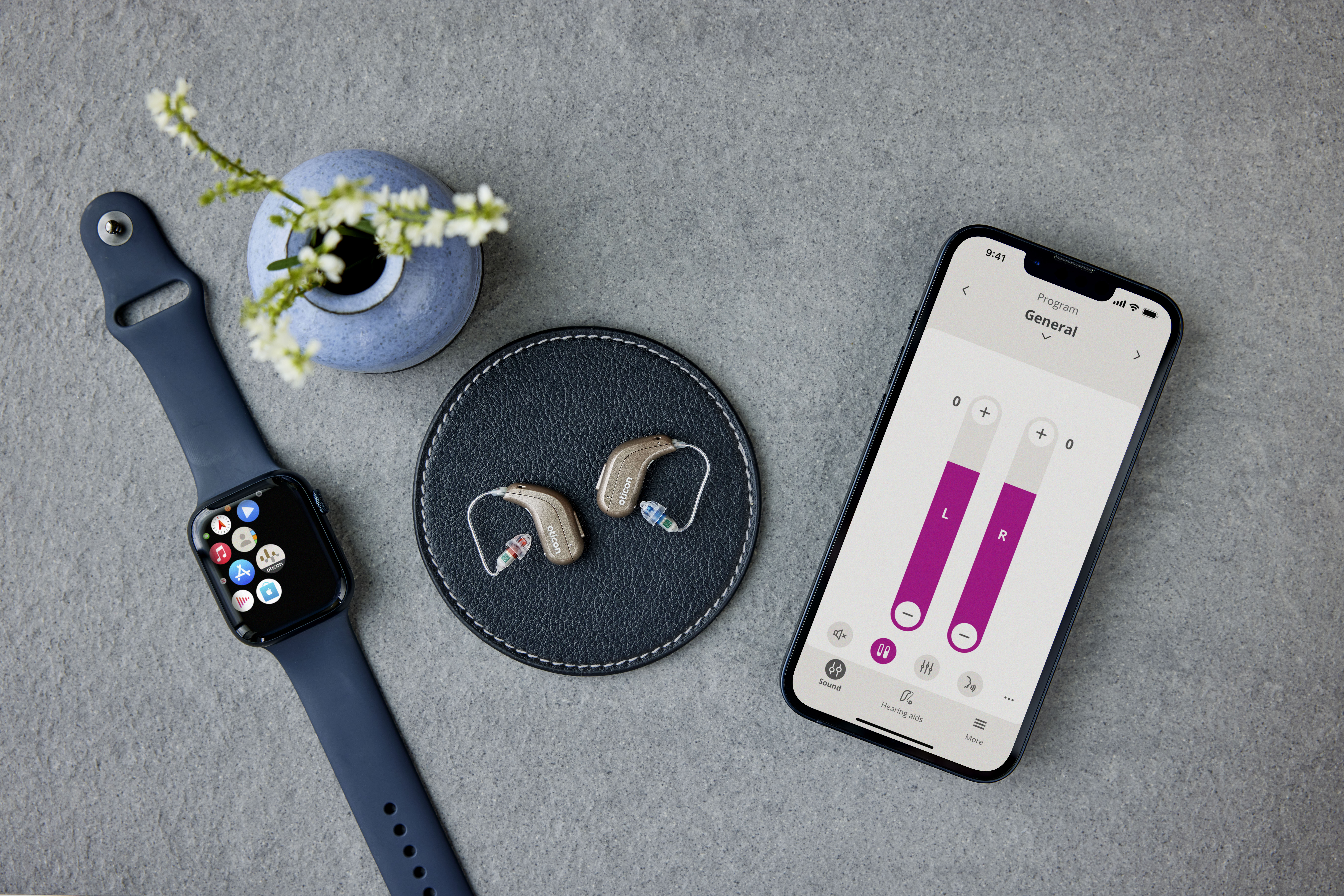
- Oticon Companion app setup — we’ll walk you through pairing with your phone, controlling settings, and using the remote-microphone feature
Frequently Asked Questions
What is “user-intent sensing” and why does it matter?
It’s the ability of the hearing aid to detect what you’re trying to do — not just what sound is reaching the microphones. When you turn your head toward a speaker, the device assumes you want to focus on them. When you start walking, it assumes you want a wider sound field. When you sit down at a noisy dinner, it adjusts microphone direction for the conversation in front of you. The goal is to anticipate your needs rather than waiting for you to manually switch programs.
Does it work with iPhone? Android?
Yes to both. Oticon Intent has direct iPhone streaming and Bluetooth LE Audio (the latest standard) for Android phones. It also supports Google Fast Pair for quick connection. You can take hands-free calls, stream music and TV, and use FaceTime/video calls through the hearing aids.
How long does the battery last?
A full charge gives you a full day of typical use, including streaming. A 15-minute quick charge gives you about 4 hours of runtime. Heavy streaming or noisy environments will reduce battery life. The charger doubles as a dehumidifying storage case overnight.
What is Auracast and where can I use it?
Auracast is a new Bluetooth-based broadcast technology being installed in public venues — train stations, museums, theaters, conference centers, airports. If a venue supports Auracast, your Oticon Intent can connect directly to the public announcement system or audio guide stream. Adoption is still growing, but Intent is future-ready.
Will my insurance cover it?
Hearing aid coverage varies widely by insurance plan. Many plans offer partial coverage or an annual allowance; some cover hearing aids only under specific conditions. We verify your benefits before your appointment — just call us at (954) 999-5495 with your insurance card information.
What if Intent isn’t the right fit for me?
We include a 60-day satisfaction guarantee. If Intent isn’t the right hearing aid for your life, return it for a refund of the device cost. Most patients use the 60-day window to test the devices in their actual day-to-day environments — work, family meals, social events — before fully committing.